
About Freedom or Personal Struggle? Historical-Critical Paper on Martin Luther: The Freedom of Christianity

About Freedom or Personal Struggle?
Historical-Critical Paper on Martin Luther: The Freedom of Christianity
By Joseph Metry
By the early 1500s, it was clear that the Church in Europe was facing a major crisis. For years, people had called for reform, not just scholars and priests, but ordinary believers too. Many priests, bishops, and even popes were living in luxury while most Christians struggled in poverty. Popes collected heavy taxes, sold indulgences for money, and often lived immoral lives, with some having mistresses and illegitimate children. The Church was ruled by rich princes rather than humble servants of God. Catholic Church at that time lost the way and the target of the church was foggy, and it seams that the church leaders forgt that they are servant no matter how high in ranking they ware.
But God didn't leave himself without witnesses, so Christians lived with deep fear about their salvation. They were taught that salvation depended on a mix of grace and good works. Thomas Aquinas (1225–1274) taught in his Summa Theologiae "For the good is a preamble to man, inasmuch as man is an individual good; and, again, the good is subsequent to man, inasmuch as we may say of a certain man that he is good, by reason of his perfect virtue.[1]" But no one could ever be sure if they had done "enough" to be saved. Even after baptism, confession, and repentance, believers still worried about spending thousands of years suffering in purgatory. The Church offered indulgences, “pay money and receive forgiveness,” which made salvation feel like a business deal, leaving many angry and afraid. Religion, for most ordinary Christians, was also filled with superstition and fear. Many did not understand complex theology. Instead, their faith became tied to fears about demons, relics, magic, and rituals that the Church often encouraged, keeping people dependent on priests and sacraments. Trust in Church authority had already been badly shaken during the Great Schism (1378–1417), when there were two, even three, rival popes, and later Church councils failed to heal the deep corruption. By the early 1500s, the Roman Curia, the papal government, was seen by many as greedy, worldly, and even godless. As Carter Lindberg explains, the Renaissance popes, like Leo X, spent fortunes on art and politics while ordinary people struggled to survive.
On top of all this, a new way of thinking was rising: Renaissance humanism. Scholars like Erasmus called people back to the Bible itself, questioning Church traditions and insisting that Scripture should be read by everyone, not just hidden away in Latin. Many began to realize that Church power was based more on human tradition than on true Christian teaching.
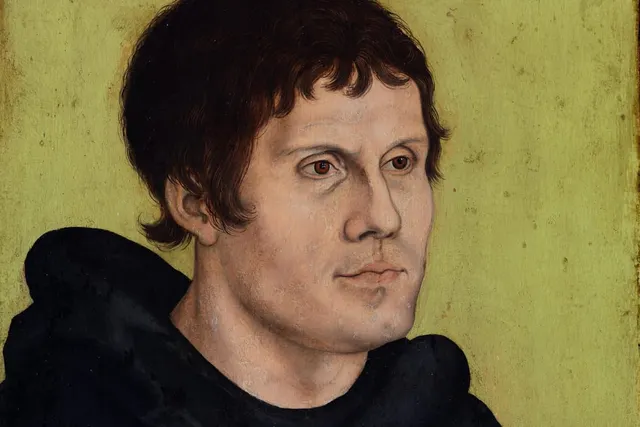
This was the world Martin Luther stepped into. In 1520, he wrote The Freedom of a Christian, a powerful book that promised something totally different than it was in practice by the church at that time, in a smart way, using the atmosphere surrounding him: claiming that he is looking for true Christian liberty through faith alone. Carter Lindberg calls this period "the age of the reformations" because so many people were ready for change, and many other reformations were made in that generation. According to Carter Lindberg, I can summarize some of these movements: “Luther's Reformation (Germany), Zwingli's Reformation (Switzerland), Calvin’s Reformation (Geneva, later France, Netherlands, etc), Anabaptists (Radical Reformation), English Reformation (Henry VIII and later Elizabeth I), Catholic (Counter-)Reformation (Council of Trent)[2]”
Before Luther, other reformers had already paid a high price for asking these questions. John Wycliffe in England and Jan Hus in Bohemia had both argued that Scripture should be available in the people's own language and that corrupt priests had no real spiritual authority. Hus was burned, sadly, at the stake at the Council of Constance in 1415, a clear message that the Church would not accept other opinions.
Meanwhile, the Renaissance spirit was awakening new hopes. Humanists like Erasmus called people back to the Bible and the early Church. He criticized the clergy for their laziness and moral failures and helped open the door for a new way of thinking. Erasmus’s edition of the Greek New Testament (1516) gave scholars direct access to Scripture, not just the Latin Vulgate controlled by Church authorities. People started to ask: What if the Church’s power was not really from God? What if Scripture mattered more than traditions?
Luther’s message found great land to grow. When we look closely at The Freedom of a Christian, we find that Luther’s ideas are filled with contradictions. He says that a Christian is "perfectly free" but also "perfectly a servant." He says that faith alone saves, but also tells Christians to fast, pray, and discipline their bodies. The Freedom of a Christian is a strong, powerful message that can deeply touch any Christian. But if you read carefully ‘between the lines,’ you can see Luther’s own internal conflict, between what he learned and lived (as a medieval Catholic) and what he was trying to newly teach (faith alone, freedom, Scripture alone, no tradition), as we will clarify later.
But by Luther’s time, the world was different. Thanks to the printing press that was stated, literacy was spreading, cities were growing, and people were more connected. When Luther posted his 95 Theses in 1517, challenging the sale of indulgences, copies spread across Germany within weeks. A pamphlet war exploded; short, fiery writings spread by cheap printing, reaching thousands of people. Luther's message was simple, emotional, and powerful. However, as Brad S. Gregory mentions, Luther was never meant to cause a collapse, but it happened.[4]
In 1517, Luther specifically attacked the preaching of Johann Tetzel, the Dominican friar who sold indulgences near Wittenberg. Tetzel’s famous slogan was, "As soon as the coin in the coffer rings, the soul from purgatory springs.[5]" Luther was furious. He saw Tetzel’s work as a total betrayal of the Gospel. Instead of helping people trust in Christ, Tetzel was selling fear. This concrete event, Tetzel’s indulgence campaign, pushed Luther from a quiet scholar to a public reformer.
However, Luther was not only moved by theology. He was also driven by personal desire and ambition. Luther had struggled for years with intense fear about his own salvation. Becoming an Augustinian monk and studying theology were part of his attempt to find peace with God. According to The Freedom of a Christian, Luther believed he had finally discovered peace through faith alone, but deep down, as we will see, his writing still shows traces of his lifelong struggle between fear and freedom. After seeing the tyranny in Rome, he wanted to free the people and himself from their torment. In his letter to Pope Leo X, written just before The Freedom of a Christian, Luther openly criticized the Roman Curia, calling it "more corrupt than Babylon or Sodom.[6]"
In The Freedom of a Christian, Luther sets out to explain how faith alone saves a person and how true Christian liberty means freedom from all the burdens the Church had placed on believers. At first, his message seems clear and strong. He writes, "A Christian is a perfectly free lord of all, subject to none[7]" This is a bold claim: in Christ, the believer no longer needs priests, indulgences, or even the Church’s complicated system of penance and good works. Instead, faith alone sets the soul free. But when we look closer, tension appears. Right after declaring that the Christian is free from all, Luther adds that a Christian is also "a perfectly dutiful servant of all, subject to all.[8]"
He tries to explain that love compels the Christian to serve others freely, not under force. However, this creates a serious question: If we are truly free, why are we now bound to serve everyone? Luther tries to balance freedom and service, which feels emotionally powerful but is logically conflicting. His own fear of a careless, lazy Christianity, where people think they can "do nothing, and be saved," leads him to reintroduce duties and responsibilities which conflict with his claim of perfect freedom. Moreover, Luther discusses faith and good works. Throughout the text, Luther insists, "Faith alone justifies," and "no outer work or action[9]" can save the soul. In contrast to this, he also says that “the Christian must actively discipline the body by fasting, prayer, watchfulness, and labor.[10]” Now if works are unnecessary for salvation, why do Christians still need to engage in them so seriously? I think Luther tries to solve this by saying that good works naturally flow out of true faith, but again, it feels like an unresolved tension. I think his deep fear was that people would misuse Christian liberty, as we currently see, treating it as an excuse for laziness or sin, which leads him to put works back into the Christian life, even though his main argument rests on faith alone.
Luther’s writing also shows a struggle between his desire to abolish the Law and his need to fulfill it. He argues that the Law cannot save anyone, and that Christians are free from its demands.[11] Again, in contrast to this, he also insists that the Law must be fulfilled through faith. "The promises of God give what the commandments of God demand and fulfill what the law prescribes,[12]" he writes. This leaves a confusing message: is the Law dead, or must it still be fulfilled through us? Luther’s experience as a monk, endlessly trying to satisfy the Law but never feeling worthy, makes me see he is still living in it, even in his new theology of freedom. When we carefully read Luther, we can see the struggles between his new ideas, what he grew up with, and what he truly believes inside. His new movement was about making people free from everything, but inside him, he tried to fulfill the law and the eucharistic life he lived as a monk. However, as Schmemann states, “The only real fall of man is his non-eucharistic life in a non-eucharistic world.[13]” In other words, if we look with the historian's eyes, I think Martin Luther was trying to make a new movement inside the catholic church itself, but he couldn’t, so he made his movement outside the catholic church. Oberman agrees with this claim, saying that Luther was not trying to make a new church; he saw himself as a son of the church called by God to redirect the church to the ‘right way.’[14]
One final contradiction appears in how Luther talks about the priesthood of all believers. He strongly declares that "all of us who believe in Christ are priests and kings.[15]" Except, he also says that not everyone should preach or administer sacraments, but only designated ministers.[16] While Luther wanted to remove clergy from the image, he made a softer version of it in practice. Deep down, he could not imagine a church completely without order and control, again showing the struggle inside him between the freedom he preached and the structure he still needed.
When reading The Freedom of a Christian, we are struck by the inner conflict that shaped it. His fear of lawlessness, his memory of the old system he grew up in, and his real human anxiety about disorder all shaped a document that preaches radical freedom but still carries strong chains to his old life. Luther’s contradictions were on one hand revealing a deeper truth: he was a man trying to reform Christianity, but he could not entirely free himself from the world he was trying to leave behind.
Even though The Freedom of a Christian is full of internal struggle, Luther’s writing style made him persuasive. One reason is that he did not write like a distant scholar. Instead, he spoke directly from personal struggle. Luther’s whole life had prepared him for this role. Since his days as a young Augustinian monk in Erfurt (1505–1512), Luther had been obsessed with the fear of damnation. He confessed for hours at a time, sometimes daily, fasted severely, and pushed himself almost to the point of collapse. However, he never felt at peace with God. His inner struggle was theological, emotional, and physical. Luther himself was a loyal monk and a very active spiritual person, making him trustworthy to people, unlike the priests at that time, who were selling salvation and not living a true spiritual life.
Another reason Luther was convincing was his brilliant use of Scripture. He argued with logic and flooded his writings with Bible verses, making his ideas seem grounded in God’s Word, not personal opinion. For example, when explaining the double statement that a Christian is both free and a servant, he uses 1 Corinthians 9:19: "Though I am free from all men, I have made myself a slave to all." This gave his contradictions the feeling of divine mystery rather than human error. Luther also combined humility and boldness in a way that ordinary people found deeply moving. He admitted openly, "I have no wealth of faith to boast of,” which made him relatable. When it came to proclaiming the Gospel, he spoke with confidence. This emotional balance made readers feel that Luther was a man who had lived the same fears they lived, not a proud priest boosting himself.
Luther’s use of images and metaphors also strengthened his argument. One of his most beautiful images is the marriage between Christ and the soul. He writes that Christ takes the believer's sins onto himself and gives the believer his righteousness in return. This picture of a loving marriage, where everything is shared between partners, made salvation feel close to the regular person on the street or in their daily life, not distant and terrifying.
Real events during this time also showed Luther’s gift for communication. For example, when he publicly burned the papal bull Exsurge Domine on December 10, 1520, outside Wittenberg’s Elster Gate, it was a shocking and unforgettable act of defiance. He was creating public engagement and presentations that spoke louder than words. His daring actions made it impossible for the Church to ignore him, and they inspired ordinary people who had long felt powerless.
Even at the Diet of Worms in April 1521, when Luther stood before Emperor Charles V and was asked to deny his thoughts, he stayed true to his style. Luther didn’t give a careful, lawyerly answer. Instead, he said simply, "Here I stand. I can do no other. God help me. Amen." Whether the words were exactly like that or not, the impression was real: Luther was putting his whole life on the line, and at the same time, with or without attention, he made a disaster.
In The Freedom of a Christian, Luther does not hide the tensions between freedom and duty, faith and works, law and grace. He doesn’t solve these contradictions completely, but on one hand, he gives readers something even more powerful: hope. He offers a vision of Christianity that speaks not just to the mind, but to the heart. That is why, despite its inner conflicts, The Freedom of a Christian remains one of the most moving and important documents of the Reformation.
But on the other hand, its long-term results show that true reformation is harder than just writing bold ideas. Luther’s challenge to the abuses of his time, especially indulgences and clerical corruption, was necessary and courageous. He reminded people that salvation is a gift from God, not something to be bought or sold. His call for freedom touched a deep pain in the Christian world, even now in our churches.
Looking back now, we can see that the reaction went too far. Instead of returning people to a stronger, purer Church, much of the Christian world shifted all the way to the other extreme. People began rejecting not just corruption, but the Church itself. They separated faith from the sacramental life. They dismissed the importance of works of love, obedience, repentance, and true communion with Christ through the Church. Luther, for example, reformed the idea of marriage by marrying Katharina von Bora and teaching that marriage is honorable. Nowadays, later movements even rejected marriage, seeing all traditional commitments as unnecessary.
If we try to have this in one sentence, what started as a cry for freedom became a force of destruction. In trying to correct real problems, many lost the balance between grace and works, faith and love, Scripture and Church. Salvation was reduced in some places to a simple act of belief, with no transformation of life. Churches split into hundreds of denominations. The deep unity that Christ prayed for “that they may be one” (John 17:21) was broken again and again, starting from the time of Leo I to Leo X.
Even though I am not personally a fan of Luther, I can see that the Reformation was an important moment in Christian history. It forced people to confront real abuses inside the Church, especially the corruption of the clergy and the misuse of authority. In that sense, the cry for reform was necessary and courageous. Christians needed to remember that salvation is the gift of God, not something controlled by human institutions or bought with money.
But at the same time, reading The Freedom of a Christian and thinking about its results makes me sad. What started as a need for reformation slowly turned into destroying everything that is holy. Over time, freedom was separated from Christ. Faith was reduced to just believing in something in your heart, without repentance, without obedience, and without the life of the Church. Today, we see even more extreme results: people speak of salvation for unbelievers, blessing same-sex marriages, and rejecting any authority or tradition at all. I even see, as Massimo Faggiloli explained, the Catholic Second Council of the Vatican, and its results were a reaction to Luther's movement.[17] Freedom became personal and selfish, based on what each person wants, instead of freedom in Christ through the life of the Church. True Christian freedom is not doing whatever we want. It is finding our true life in Christ, inside the communion of the Church, through the sacraments, prayer, repentance, and love. Without the Church, without sacramental life, without tradition, and without the following of the apostolic faith, we are refusing the work of the Holy Spirit in the life of the Church, and in that direction, there is no meaning for freedom.
[1] Aquinas, Thomas. Summa Theologica. Translated by Fathers of the English Dominican Province. Question 109, Article 5; Question 111, Article 2. Pg. 1062
[2] Lindberg, Carter. The European Reformations. 2nd ed., Wiley-Blackwell, 2010.
[4] Brad S. Gregory, The Unintended Reformation: How a Religious Revolution Secularized Society (Cambridge, MA: Belknap Press of Harvard University Press, 2012), 2.
[5] Carter Lindberg, The European Reformations, 2nd ed. (Chichester, UK: Wiley-Blackwell, 2010)
[6] Luther, Martin. Letter to Pope Leo X, 1520. In Three Treatises, translated by Charles M. Jacobs, revised by James Atkinson, 33–43. Philadelphia: Fortress Press, 1970.
[7] Martin Luther, The Freedom of a Christian, ed. Mark Tranvik (Minneapolis: Fortress Press, 2008), pg. 12
[8] Martin Luther, The Freedom of a Christian, ed. Mark Tranvik (Minneapolis: Fortress Press, 2008), pg. 12
[9] Martin Luther, The Freedom of a Christian, ed. Mark Tranvik (Minneapolis: Fortress Press, 2008), pg. 15
[10] Martin Luther, The Freedom of a Christian, ed. Mark Tranvik (Minneapolis: Fortress Press, 2008), pg. 24
[11] Martin Luther, The Freedom of a Christian, ed. Mark Tranvik (Minneapolis: Fortress Press, 2008), pg. 17
[12] Martin Luther, The Freedom of a Christian, ed. Mark Tranvik (Minneapolis: Fortress Press, 2008), pg. 16
[13] Alexander Schmemann, For the Life of the World: Sacraments and Orthodoxy (Crestwood, NY: St. Vladimir’s Seminary Press, 1973)
[14] OBERMAN, HEIKO A., and Eileen Walliser-Schwarzbart. Luther: Man Between God and the Devil. Yale University Press, 1989. https://doi.org/10.2307/j.ctt1ww3vzs.
[15] Martin Luther, The Freedom of a Christian, ed. Mark Tranvik (Minneapolis: Fortress Press, 2008), pg. 21
[16] Martin Luther, The Freedom of a Christian, ed. Mark Tranvik (Minneapolis: Fortress Press, 2008), pg. 22
[17] Massimo Faggioli, Vatican II: The Battle for Meaning (New York: Paulist Press, 2012), Chapter 2, “Questioning the Legitimacy of Vatican II.
Steven Ozment, The Age of Reform, 1250–1550: An Intellectual and Religious History of Late Medieval and Reformation Europe (New Haven: Yale University Press, 1981), pg. 210