
Catholic Mariology and the Coptic Orthodox Perspective

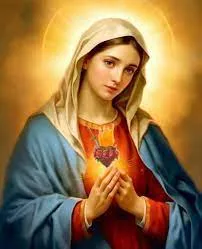
Mariology is the theological study of the Virgin Mary’s role in salvation history. For both Catholics and Orthodox Christians, St. Mary is honored as Theotokos (Mother of God) and Panagia (All-Holy). She is central to the mystery of the Incarnation, since God the Word truly took flesh from her.
However, Catholic theology developed certain dogmas about St. Mary in later centuries that the Coptic Orthodox Church does not formally accept as binding. These include the Immaculate Conception, the Assumption, and titles such as Mediatrix and Co-Redemptrix.
The difference is not in the depth of veneration: both Churches honor St. Mary above all saints. The difference is in how her holiness is explained and her relationship to the salvation whether certain teachings should be treated as dogmas of faith or as pious traditions.
1. The Immaculate Conception
Catholic Teaching
The Immaculate Conception was defined in 1854 by Pope Pius IX (Ineffabilis Deus). It states that:
“The most Blessed Virgin Mary, in the first instance of her conception, by a singular grace and privilege of almighty God, in view of the merits of Jesus Christ, Savior of the human race, was preserved free from all stain of original sin.”
This does not mean St. Mary did not need salvation. Instead, Catholic theology argues that she was saved by Christ in a preventive way: the merits of His death and resurrection were applied to her at the moment of her conception. Thus, she was never touched by original sin.
The Role of Duns Scotus
Before Scotus (d. 1308), even great theologians like St. Bernard of Clairvaux and St. Thomas Aquinas had doubts. They feared that exempting St. Mary from original sin would mean she did not need Christ’s redemption.
Scotus solved the dilemma with the idea of preventive redemption:
- All people are redeemed after they fall into sin.
- St. Mary was redeemed beforehand, preserved from falling, by the merits of Christ applied in advance.
- This way, Christ is still her Redeemer, but in the most perfect sense.
This became the foundation for the later dogma.
Biblical Foundations
Catholic theology reads several biblical texts as pointing to this:
- Genesis 3:15 – The Protoevangelium
“I will put enmity between you and the woman, and between your seed and her seed…”- Catholics understand this “woman” as St. Mary.
- Perfect enmity with the serpent means she could not have been even briefly under sin.
- Luke 1:28 – The Annunciation
“Hail, full of grace (κεχαριτωμένη- KeHaretomene).”- The Greek word means “having been filled with grace and remaining so.”
- Catholics argue: if she was completely full of grace, there was no room for sin.
- Romans 5:12–21 – Christ the New Adam
- St. Paul:- contrasts Adam (who brought sin) with Christ (who brings superabundant grace).
- Catholics apply this to St. Mary: if grace is “superabundant,” then the Mother of Christ must receive it in the highest possible way.
- Hebrews 7:26 – The Fitting Mother
“Such a high priest was fitting for us — holy, innocent, undefiled…”- The Mother of the High Priest should also be uniquely holy and undefiled.
Patristic Witness
- St. Irenaeus (d. 202): St. Mary as the New Eve, who untied the knot of Eve’s disobedience by her faith. (Against Heresies III.22.4)
- St. Ephrem the Syrian (d. 373): “You and your Mother are without blemish.” (Carmina Nisibena 27:8)
- St. Augustine (d. 430): Though he taught the universality of original sin, he made one exception: St. Mary, “for the honor of the Lord.” (De natura et gratia 36.42)
These Fathers do not explicitly teach the Immaculate Conception, but they show the unique holiness of St. Mary that prepared the way for later Catholic reflection.
Coptic Orthodox View
The Coptic Church also calls St. Mary Panagia (All-Holy). In the Divine Liturgy, she is honored above Cherubim and Seraphim. However:
- Different doctrine of original sin:
In Latin theology, original sin is inherited guilt. In Orthodox theology, we inherit corruption, death, and inclination to sin — not just the guilt. - No exemption needed:
St. Mary was born into the fallen world like us but was sanctified. - Christ saved even His Mother:
She too needed redemption through Christ’s death and resurrection, not a preventive exemption. - The Incarnation:
If St. Mary never shared in our fallen condition, then Christ would not have taken on our full humanity from her. That weakens the logic of salvation.
+ For the Coptic Church, St. Mary is supremely holy, but not conceived immaculately. Her holiness is the result of her life in grace, not an exemption from the common human condition.
2. The Assumption of St. Mary
Catholic Teaching
In 1950, Pope Pius XII defined the Assumption in Munificentissimus Deus:
“The Immaculate Mother of God… having completed the course of her earthly life, was assumed body and soul into heavenly glory.”
This affirms that St. Mary’s body did not see corruption. Unlike the Immaculate Conception, this dogma was already universally celebrated in both East and West before it was defined.
Tradition and Fathers
- Apocryphal “Transitus Mariae” (4th–5th centuries) tell of St. Mary’s Dormition and assumption.
- St. Epiphanius (d. 403): “Whether she died or was buried, we do not know.” (Panarion 78.11)
- St. John of Damascus (d. 749): “It was fitting that she should be kept incorrupt after death.” (Homily on the Dormition 2.14)
- The Feast of the Dormition was fixed in the East in the 6th century and spread to Rome.
Theological Reasoning
- Fittingness: St. Mary’s body was the dwelling place of God. It was appropriate that it should not decay.
- Participation in Resurrection: St. Mary shares fully in her Son’s victory over death. She is the first fruits of redeemed humanity.
Coptic Orthodox Belief
The Coptic Church also celebrates St. Mary’s bodily assumption. The Synaxarion on 16 Mesra (Aug 22) records that angels carried her body into heaven. "Safavid group Ebn El Asal !15 page 172"
- The Fast of St. Mary (Aug 7–22) is a time of prayer and intercession, preparing for the feast. "Safavid group Ebn El Asal !15 page 172"
- Difference:
- We celebrate it liturgically, but not as a dogma of faith.
- Orthodox theology avoids declaring dogmas that are not in Scripture or Ecumenical Councils.
- We reject papal infallibility, so we do not recognize Pius XII’s ex cathedra definition.
In practice, the belief is shared. The difference is that Catholics bind it as dogma, while Copts live it as tradition.
St. Mary as Mediatrix
Catholic Teaching
St. Mary is often called “Mediatrix of all graces,” meaning that all graces from Christ pass through her hands to humanity. This emphasizes her unique maternal cooperation in salvation.
Coptic Understanding
(1 Tim 2:5)
Christ alone is the Mediator, Hi is alone has the expiatory intercession . "For there is one God and one Mediator between God and men, the Man Christ Jesus," (1 Tim 2:5).
- St. Mary intercession is a supplication, not an expiatory intercession.
Yes — Intercessor:
St. Mary intercedes for us constantly. In every Liturgy, we pray:
“By the intercessions of the Theotokos, O Lord, grant us the forgiveness of our sins.”
The Theotokia call her “the bridge to heaven” and “the second heaven.”
In Orthodox thought, her role is maternal and intercessory.
St. Mary as Co-Redemptrix
Catholic Idea
Some Catholics call St. Mary “Co-Redemptrix” to highlight her cooperation:
- She said “yes” at the Annunciation.
- She stood at the Cross, sharing in her Son’s sufferings.
- She spiritually offered her Son for the salvation of the world.
This title has not been defined as dogma but is promoted by some Catholic theologians.
Coptic Response
The Coptic Church recognizes St. Mary’s obedience and suffering. She is the New Eve who cooperated with God’s plan. But Christ alone is Redeemer.
At the 9th Hour we pray everyday:
When the mother saw the Lamb and Shepherd, the Savior of the world, hung on the Cross, she said while weeping, “The world rejoices in receiving salvation, while my heart burns as I look at Your crucifixion which You are enduring for the sake of all, my Son and my God.”
Any title that suggests St. Mary shares in the very act of redemption risks confusing her unique role as Mother and intercessor with Christ’s unique role as Savior.
Sources
Biblical: Genesis 3:15; Luke 1:28; Romans 5:12–21; Hebrews 7:26; 1 Timothy 2:5.
Patristic:
- Irenaeus, Against Heresies III.22.4
- Ephrem the Syrian, Carmina Nisibena 27:8
- Augustine, De Natura et Gratia 36.42
- Epiphanius, Panarion 78.11
- John of Damascus, Homily on the Dormition
Medieval:
- Bernard of Clairvaux, Epistle 174
- Thomas Aquinas, Summa Theologica III, q.27
- John Duns Scotus, Ordinatio III, d.3, q.1
Catholic Magisterial:
- Sixtus IV, Cum Praeexcelsa (1476)
- Pius IX, Ineffabilis Deus (1854)
- Pius XII, Munificentissimus Deus (1950)
Coptic:
- Synaxarion (16 Mesra)
- Ibn Kabar, Miṣbāḥ al-Ẓulma (14th c.)
- Liturgy: Theotokia, Doxologies, Divine Liturgy prayers