
The Catholic Church from the Coptic Point of View


What does “Catholic” mean?
The Original Meaning of “Catholic”
The word Catholic (Greek: καθολική) originally meant “universal” and was applied to the entire undivided Church of Christ—not only the Roman Church.
- Early Usage in Worship: In the Coptic Liturgy of Peace, we still pray:
“ⲚⲔⲀⲐⲖⲒⲔⲎ ⲚⲀⲠⲞⲤⲦⲞⲖⲒⲔⲎ — ⲔⲀⲐⲞⲖⲒⲔⲎⲤ ⲔⲈⲀⲠⲞⲤⲦⲞⲖⲒⲔⲤ ⲞⲢⲐⲞⲆⲞⲜⲨ”
(the one, holy, catholic, and apostolic Orthodox Church).
Historian J.N.D. Kelly explains:
“As regards ‘Catholic,’ its original meaning was ‘universal’ or ‘general.’ … in the latter half of the second century at latest, we find it conveying the suggestion that the Catholic is the true Church as distinct from heretical congregations.”
(Early Christian Doctrines, pp. 190–191)
Ignatius of Antioch (c. 110 AD) wrote:
“Wherever the bishop appears, there let the people be; just as wherever Jesus Christ is, there is the Catholic Church.”
(Greek: Ὅπου ἂν φανῇ ὁ ἐπίσκοπος … ἐκεῖ ἡ καθολικὴ ἐκκλησία.)
Thus, in the first centuries, Catholic meant the true, visible, universal Church of Christ spread throughout the world.
What does “Orthodox” mean?
- The word comes from Greek : ὀρθόδοξος
- 1- orthos (right/straight) +
- 2-doxa (belief/opinion; also “glory/worship”). So, it Meant the right belief.
Earliest Christian uses (4th–5th centuries)
As the Arian controversy raged, church historians and bishops began contrasting the “orthodox” with the heretical parties:
The term orthodox began to be used widely in the early Church during the struggles against heresies such as Arianism. The Fathers and church historians used “orthodox” to describe those who kept the true faith handed down from the apostles.
St. Cyril of Alexandria (d. 444), in his letters against Nestorius, used the term “orthodox” to describe the faith of the true Church:
“We have all been taught to confess one Christ and Lord… and this is the orthodox and apostolic faith.” (Third Letter to Nestorius, read at the Council of Ephesus, 431).
St. Basil the Great (d. 379), in his writings against the Pneumatomachians (deniers of the divinity of the Holy Spirit), insisted that the orthodox confession is to glorify the Spirit together with the Father and the Son:
“We are bound to confess the Spirit with the Father and the Son, for this is the faith of the orthodox.” (On the Holy Spirit, 10).
St. Athanasius the Apostolic (d. 373), in his defense of the Nicene Creed against Arius, repeatedly contrasts the “orthodox” faith of the Church with the heresy of the Arians:
“This is the faith of the Catholic Church; this is the faith of the orthodox; in it we are made bold to confess the consubstantial Son of God.” (Orations Against the Arians).
- Socrates Scholasticus (5th c.) describing Arian persecution:
“After this the Arians, becoming bolder, grievously harassed the orthodox party…” New Advent - Theodoret of Cyrrhus "was condemned as a heretic during his lifetime " (mid-5th c.), in the Acts around Chalcedon:
“I was brought up by the orthodox, I was taught by the orthodox, I have preached orthodoxy…”
These are typical of 4th–5th-century language, when “orthodox” became a common adjective for Nicene/conciliar faith (what Britannica also notes generally as first used by the Greek Fathers in the early 4th century). Encyclopedia Britannica
From adjective to public label
- In imperial law, “orthodoxy” becomes the Empire’s official religion. The Code of Justinian (Book 1) begins by affirming Catholic Orthodoxy as the state faith (continuing Theodosius I’s Cunctos populos). bazhum.muzhp.pl
- Emperor Justinian (527–565 AD) – in his laws (Corpus Juris Civilis, Codex 1.1.1)
“We desire that all peoples subject to Our benevolence shall live by that religion which the divine Peter the Apostle delivered to the Romans … and which the Pontiff Damasus and Peter, Bishop of Alexandria, men of saintly memory, followed; that is to say, according to the apostolic discipline and the doctrine of the Gospel, let us believe in the one deity of the Father, Son, and Holy Spirit, of equal majesty in the Holy Trinity. We order that the name of Catholic Christians and Orthodox shall be applied to those who follow this law…”
The council (also called the Quinisext Council) calls itself:
“the holy and ecumenical council … preserving the apostolic and orthodox traditions.”
- As a self-designation of the Eastern communion, it’s explicit by the Synod of Jerusalem (1672) in the Confession of Dositheus, which repeatedly speaks of “our Orthodox faith,” “Orthodox bishops,” etc. (English translations readily available). Christian Classics Ethereal LibraryApostles CreedInternet Archive
By the Middle Byzantine period (9th–11th c.), official Byzantine documents and Patriarchal letters regularly speak of “the Holy Orthodox Church of God”.
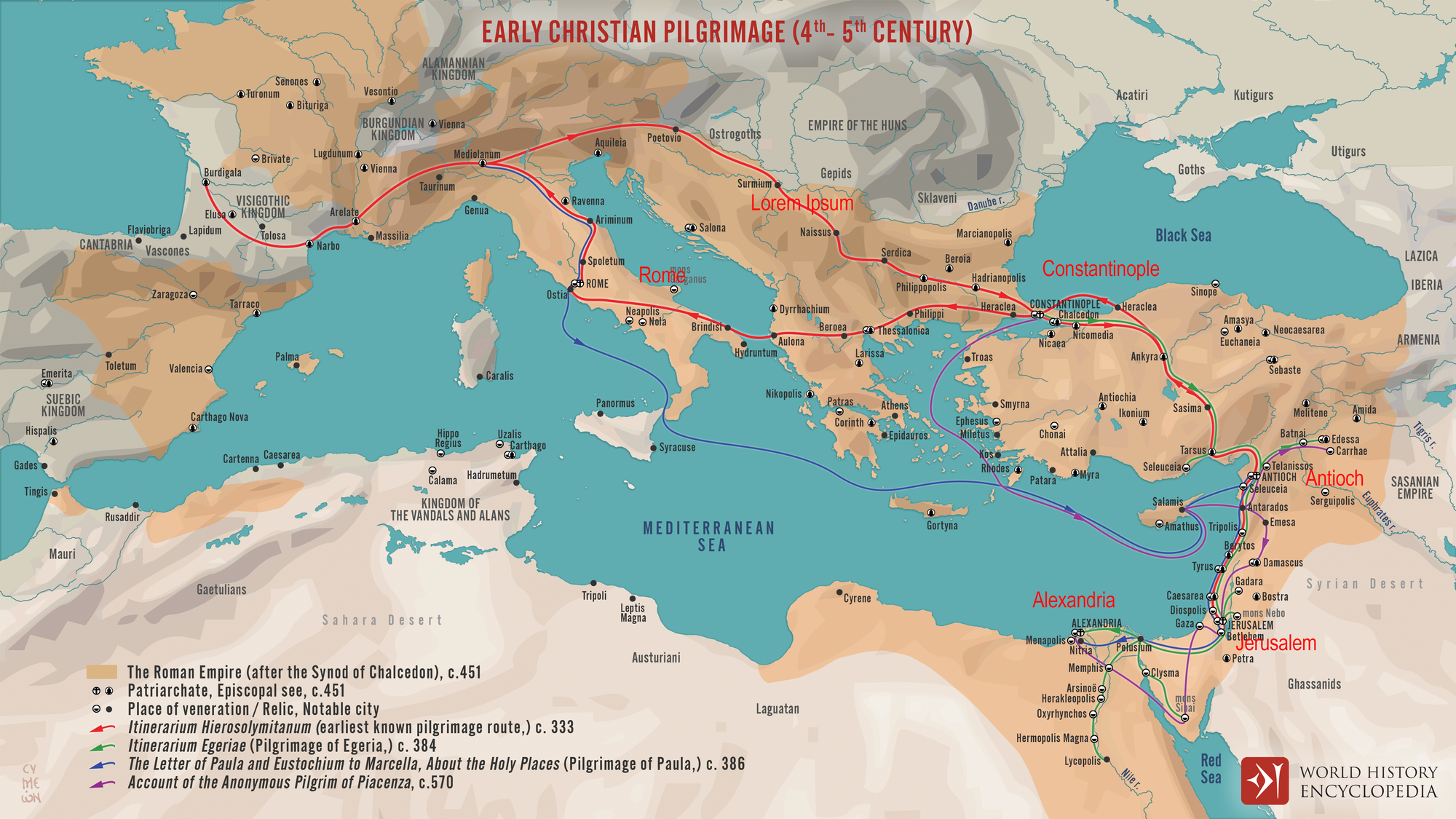
The Church of Alexandria is not a sect Church
From the Apostolic Age until the 5th century, the Church of Alexandria (later known as the Coptic Orthodox Church) was one of the great centers of Christianity.
- Together with Rome, Constantinople, Antioch, and Jerusalem, it formed the Pentarchy (the five great sees).
- The Coptic Church is not a sect that was made by a specific person or random idea later; it was a full and essential part of the one, holy, catholic, and apostolic Church.
1. The Word “Orthodox” in the Alexandrian Church
The Coptic Orthodox Church was originally part of the one universal (katholikē) Church. Before the Council of Chalcedon (451), Alexandrian fathers used the adjective ὀρθόδοξος (orthodoxos, “right-believing”) the same way as other Greek-speaking fathers: to describe the faith of Nicaea (325) and Constantinople (381).
Athanasius of Alexandria (d. 373), in his writings against Arianism, often contrasted the ὀρθόδοξος πίστις (“orthodox faith”) with heretical teachings. For example, in his Defense of the Nicene Definition he appeals to the “orthodox sense” (ὀρθόδοξος φρόνησις) of the Creed.
“But let us consider the very orthodox meaning of the words…” (De Decretis 20)
In Coptic translations of Greek conciliar texts, the word ⲟⲣⲑⲟⲇⲟⲝⲟⲥ appears directly as a loanword. This shows that the Alexandrian Church adopted the term early in the 4th century.
2. At the Council of Chalcedon (451)
The split occurred when the Alexandrian church rejected the Chalcedonian definition. After this, “orthodox” was claimed by both sides:
The Chalcedonians (later the “Eastern Orthodox”) said they preserved “orthodoxy” by upholding two natures in Christ.
The Copts and other non-Chalcedonians (Syriac, Armenian, Ethiopian) insisted that they were the true Orthodox, preserving the faith of St. Cyril of Alexandria: “One nature of God the Word incarnate” (μία φύσις τοῦ Θεοῦ Λόγου σεσαρκωμένη).
From this point onward, the Copts consistently called themselves “Orthodox” in their own writings and liturgical titles. In the Coptic Synaxarion and liturgical texts, martyrs and bishops are frequently praised as ⲟⲣⲑⲟⲇⲟⲝⲟⲥ (orthodox) in faith. Pope Benjamin I of Alexandria (622–661), in his letters, defended the “Orthodox confession” handed down from St. Mark and St. Cyril, over against the Chalcedonians.
By the end of 500, the official name of the Church in Arabic and Coptic documents is “The Coptic Orthodox Church of Alexandria” (ⲕⲩⲣⲓⲁⲕⲏ ⲙⲏⲧⲣⲟⲡⲟⲗⲓⲥ ⲧⲏⲥ ⲁⲅⲓⲁⲥ ⲟⲣⲑⲟⲇⲟⲝⲟⲥ ⲉⲕⲕⲗⲏⲥⲓⲁⲥ).
The Schism of Chalcedon (451 AD)
The Council of Chalcedon caused the first great division:
- Non-Chalcedonian (Miaphysite) Churches:
- Alexandria (Coptic Orthodox)
- Antioch (Syriac Orthodox)
- Armenia, Ethiopia (later Eritrea and India)
- These churches held to the Miaphysite faith of St. Cyril: “One nature of the Incarnate Word of God.”
- Called themselves Orthodox = “straight faith.”
- Nicknamed Jacobites (after St. Jacob Baradaeus, 6th c.), though the Church never called itself that.
- Chalcedonian Churches (Melkites):
- Rome, Constantinople, Antioch (Greek), Jerusalem
- Accepted Chalcedon’s definition of “two natures in Christ.”
- Called Melkites (“King’s men”) because they were supported by the Byzantine Emperor.
Between 451–1054: Two Main Families
For six centuries, Christianity existed in two main families:
- Oriental Orthodox (Non-Chalcedonian)
- Coptic, Syriac, Armenian, Ethiopian, Eritrean, Indian
- Chalcedonian (Melkite)
- Rome and Constantinople still in communion with one another
- Included both East and West
The Great Schism (1054 AD)
A second great division occurred in 1054:
- Western (Rome) → became the Roman Catholic Church under the Pope.
- Eastern (Constantinople, Antioch, Jerusalem, etc.) → became the Eastern Orthodox Church.
The Result After 1054: Three Ancient Families
From the 11th century onwards, Christianity has three major ancient families:
- Oriental Orthodox (Non-Chalcedonian)
- Coptic, Syriac, Armenian, Ethiopian, Eritrean, Indian
- Eastern Orthodox (Chalcedonian)
- Greek, Russian, Serbian, Antioch (Greek), Constantinople, etc.
- Roman Catholic
- Centered in Rome under the Pope
| Branch | Key Date(s) | Key Event(s) | Name Meaning | Main Identity Focus |
|---|---|---|---|---|
| Catholic (Rome) | 110 (Ignatius), 1054, 1545–63 | Catholic name first used; Great Schism; Council of Trent | Universal | Unity under Pope of Rome |
| Coptic Orthodox | 42 (St. Mark), 451 | Founding of Alexandrian See; Rejection of Chalcedon | Right faith | Miaphysite Christology, St. Cyril |
| Byzantine Orthodox | 451, 1054 | Chalcedon; Great Schism | Right faith | Chalcedonian Christology, Conciliar |
| Protestant | 1517, 1529 | Luther’s 95 Theses; Diet of Speyer Protest | Protesting | Sola Scriptura, no papal authority |