
The Eternal Procession of the Holy Spirit & the Eternal Generation Of The Son

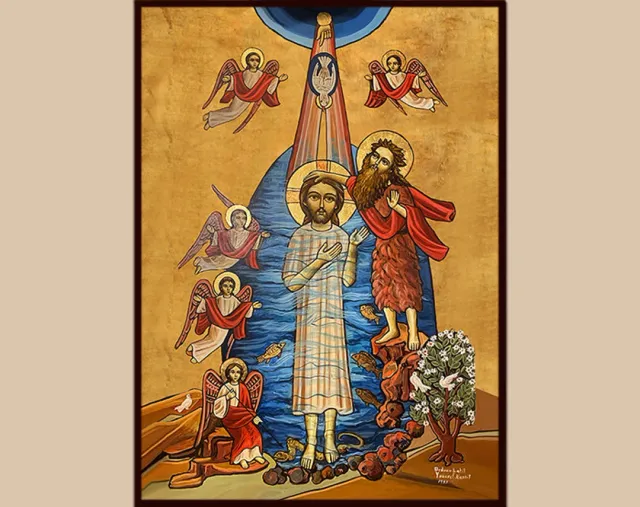
1. The Generation of the Son (Γέννησις / yannisis)
Meaning: The Father eternally begets the Son; the Son is begotten of the Father, not created, and without beginning in time.
Scriptural Basis:
- John 1:18: “The only-begotten Son, who is in the bosom of the Father, He has made Him known.”
- John 3:16: “For God so loved the world, that He gave His only-begotten Son.”
Patristic Witness:
- St. Athanasius the Apostolic: “The Son is of the Father’s essence, begotten not made.” (Orationes contra Arianos I.14).
- St. Cyril of Alexandria: Emphasizes that the eternal generation is an inner mystery of the Trinity, not a temporal event.
St. Cyril of Alexandria – Thesaurus, PG 75, 120AB:
“We do not say that the Son was generated in time, nor that He came into being after the Father. Rather, we affirm that He is always with the Father, being begotten of Him by nature, not as a creature is made, but in a manner ineffable and incomprehensible to all.”
Theological Meaning: Generation indicates the essential relationship of the Father and the Son: unity of essence with distinction of hypostasis.
2. The Procession of the Holy Spirit (ἐκπόρευσις /ekpórefsis )
Meaning: The Holy Spirit eternally proceeds from the Father.
Scriptural Basis:
- John 15:26: “When the Comforter comes, whom I shall send to you from the Father, the Spirit of truth who proceeds from the Father, He will bear witness of Me.”
Patristic Witness:
St. Athanasius — Letters to Serapion on the Holy Spirit, I.20 (PG 26:585C):
“The Spirit is not a creature, but comes forth from the Father; for there is one God and Father, from whom all things proceed, and one Lord Jesus Christ, through whom all things were made, and one Holy Spirit, in whom all things are made holy.”
- St. Basil the Great: The Holy Spirit proceeds from the Father and is sent through the Son (De Spiritu Sancto 18).
- St. Gregory Nazianzen: Distinguishes between the Son and the Spirit: the Son is begotten, the Spirit proceeds (Orationes Theologicae 31.8).
Theological Meaning: Procession differs from Generation, yet both are eternal. Generation expresses the relation of sonship, while procession expresses the relation of life and power flowing forth from the Father.
St. Gregory the Theologian (Nazianzus)
In his Theological Orations, Gregory affirms that we cannot explain the “how” of the Son’s generation or the Spirit’s procession, but we know that there is a distinction:
“We cannot conceive of the manner of the generation of the Son, nor of the procession of the Spirit. But we must believe that the Son is begotten, and the Spirit proceeds. The distinction is that one is generation and the other is procession.” (Oration 31.8, Theological Orations).
St. Basil the Great
In On the Holy Spirit, Basil explains the difference by emphasizing the unique way each Person comes from the Father:
“The Spirit is said to proceed from God, and to be sent by the Son; the Son is said to be begotten of the Father. The distinction between them is preserved: one is begotten, the other proceeds.” (De Spiritu Sancto 18).
Summary
- Gregory Nazianzen (Or. 31.8): The Son is begotten, the Spirit proceeds — the exact “how” is beyond comprehension.
- Basil of Caesarea (De Spiritu Sancto 18): The Son’s relationship to the Father is by begetting, the Spirit’s is by procession, while being sent through the Son.
sources
St. Athanasius, Orations against the Arians.
St. Basil, On the Holy SpiritSt. Basil, On the Holy Spirit
St. Gregory Nazianzen, Theological Orations